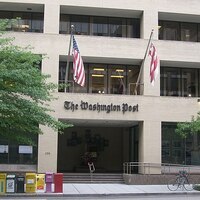



WASHINGTON, D.C.: A former innovation unit of the U.S. government's foreign aid agency has resurfaced as an independent nonprofit, after private donors stepped in to preserve work halted by sweeping funding cuts last year.
The Development Innovation Ventures (DIV) unit of the U.S. Agency for International Development, which was eliminated during the Trump administration's cutbacks, formally relaunched this week as the DIV Fund. The new nonprofit is backed by US$48 million from two private donors, allowing it to continue supporting international development projects outside the government.
The move follows last year's freeze on U.S. foreign assistance and the dismantling of large parts of USAID, a process that ended decades of programming, eliminated tens of thousands of jobs, and disrupted aid delivery worldwide. While numerous private initiatives attempted to preserve USAID data, keep programs alive, or reimagine development financing, few secured funding on the scale achieved by the DIV Fund.
"The loss of US government support is a huge blow," said Michael Kremer, the DIV Fund's scientific director and a Nobel Prize-winning economist. "It's wonderful that private funders have stepped up to help try to fill part of that gap, but it's only filling part of the gap."
As a nonprofit, the DIV Fund plans to award about $25 million annually—just over half of what DIV spent while housed at USAID. Leaders of the new entity were also involved in directing $110 million in private philanthropy over the past year to projects that lost U.S. government funding.
Fundraising success has been driven by DIV's narrow focus and track record. The fund operates as a research-and-development hub, identifying low-cost, high-impact interventions and supporting their expansion, rather than running large-scale aid programs itself. While still inside USAID, DIV had already attracted outside support, including a $45 million grant from Coefficient Giving, now an anchor donor to the nonprofit. The second donor remains anonymous.
Kremer said many of the projects DIV supports are designed to be sustained by local governments or earned revenue, reducing reliance on long-term donor funding — an approach that has become more critical as traditional aid budgets shrink globally.
Of the $48 million raised so far, $20 million has been earmarked for former grantees, leaving $28 million for future awards. The DIV Fund will issue an open call for applications this year and aims to work with institutions such as the World Bank and other donor governments to encourage similar evidence-based funding models.
Otis Reid of Coefficient Giving said that with official aid budgets under pressure, effectiveness matters more than ever. "It just matters a ton if that money is going towards things that are highly effective or moderately effective or not effective," he said.
Many DIV-backed programs rely on randomized controlled trials, a method praised for measuring effectiveness but not without limits. "It is the most robust research design for answering questions about the effectiveness of interventions compared to usual treatment, absolutely," said Kathryn Oliver of the London School of Hygiene and Tropical Medicine. "But it is not the most robust design for answering any other kind of questions."
The DIV Fund said it remains open to working with the U.S. government, even as its future relationship with Washington remains uncertain.