

Whatever we may think about our moral responsibility to other nations, the effects of inequality are becoming irreversible.Mark Beesonreports.
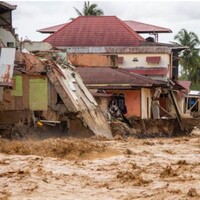
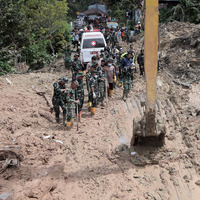
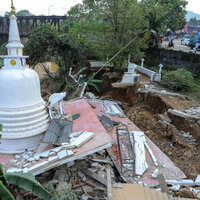
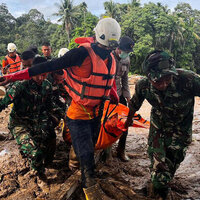
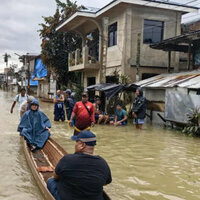
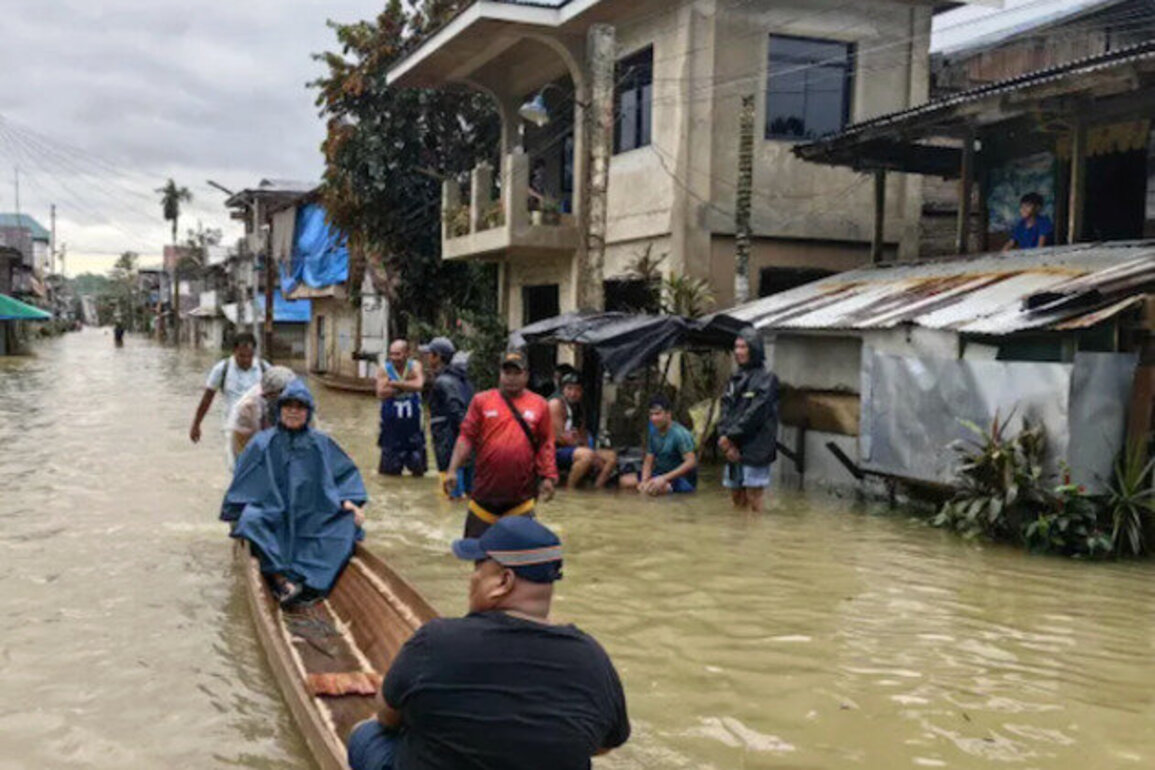
SOUTH AND SOUTHEAST ASIA are currently trying to recover from a "once in a generation" weather event, as we now call them. The odds are they will have another one in the next couple of years. The Philippines even managed to experience two cyclones within a week, andtwo moremay be on the way. Im no climate scientist, but I think there may be a pattern here.
Even if we cant predict the weather, we can predict the sort of damage that massive cyclones are likely to inflict, especially in countries that lack the sorts of wealth and state capacity that help to insulate Australia from some of the worst effects of unmitigated climate change. Help may be a bit slow arriving at times and not as much as victims might like, but at least there is a response.
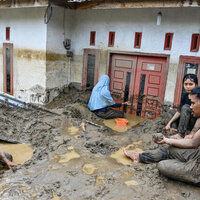
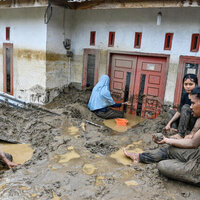
Imagine living in Sumatra, where at least 600 people have been killed or Thailand, where "only' 176 have died a toll that is sure to rise, of course. But its not simply the scale of the initial death anddestructionthat distinguishes our neighbours problems from ours, its the soul-wearying struggle to reconstruct what has been lost: the homes, livelihoods and limited infrastructure that made life bearable and even hopeful.
Western liberalism and the harsh reality of climate changeCapitalism'sunrestrained access to political influence, land andlabour is starting to cannibalise the very consumer market it requires to exist.
Unbelievably enough, things could be worse. Sudan is currently being ravaged by climate change and a civil war. Im not an expert on the internal politics ofSudaneither, but clearly some men they always are think even modest wealth and privilege are worth fighting and killing for. Theres always the chance for the young foot soldiers of oppression to let off some steam with a bit of old-fashioned raping and pillaging as well, of course.
These kinds of civil wars are increasingly common but generally ignored as they dont involve people like us or the immediate interests of the West. Maintaining the attention of the so-called international community was a problem even before anachronistic forms of interstate war and/or conquest broke out in Eastern Europe and Palestine. Did the horrors ofHaitiever make the front page anywhere?
It might seem an odd time to be arguing that the likelihood of civil war breaking out in places like the U.S. is not only increasing, but in some forms, at least, it might not be a bad thing. Yet that is precisely the argument thatAjay Singh Chaudharymakes inThe Exhausted of the Earth, which has the great merit of trying to link climate change to a growing tide of social conflict and anxiety.
The idea that a rapidly deteriorating natural environment could have animpacton even the most apparently stable democracies is not a new one. Nor is the claim that capitalism, growth and endless consumption are the principal sources of our problems, even if those of us who are more responsible for them generally suffer less from their consequences than the poor.
Whatever you may think about the possible moral responsibilities of fortunate countries like Australia to help, and in Americas case, stop making the problem worse as an act of consideredpublic policy, the implications for our collective future are becoming stark and incontrovertible. Somearguethat the only thing that can save us is a revolution in the constitution of human society itself.
This is why the likes of Singh argue that some form of resistance to the forces that seem to be driving us to destruction is necessary and unavoidable if we are to survive, much less lead the proverbial good life our policymakers still promise.
He suggests that:
To judge by the increasingly heavy-handedapproachtaken to environmental activists and protesters in this country, he may have a point. What is less clear is whether there is any alternative to a confrontation with the growing number of authoritarian regimes, not the least of which is theU.S.
UN warns extreme heat will become more frequent, intense and widespreadDestabilised food systems, school closures, heatstroke, disease millions in our region are feeling the effects of climate change.
America also highlights just how destructive and powerful the network of "broligarchs" around Donald Trump has become, as they seek to leverage political influence for economic advantage. But if youre waiting fortechnologyto save us, you may be disappointed, Im afraid. On the contrary, not only is the crypto world consuming vast amounts ofenergy, but it may be creating the conditions for the next financial crisis, too.
Never mind, economists and policymakers are always telling us we need a level playing field to encourage competition and efficiency. I didnt realise global immiseration of the masses was what they had in mind, though.
Mark Beesonis an adjunct professor at the University of Technology Sydney and Griffith University. He was previously Professor of International Politics at the University of Western Australia.
Related Articles
- Climate commitments crumble as ANZ and Westpac bankroll new fossil projects
- Coalition of the unlikely: How Australia and China could save the planet
- The Liberal guide to net zero: How to do nothing and call it policy
- Nationals net zero backflip a disaster for the regions
- Gray whale population crashes amid climate-driven starvation